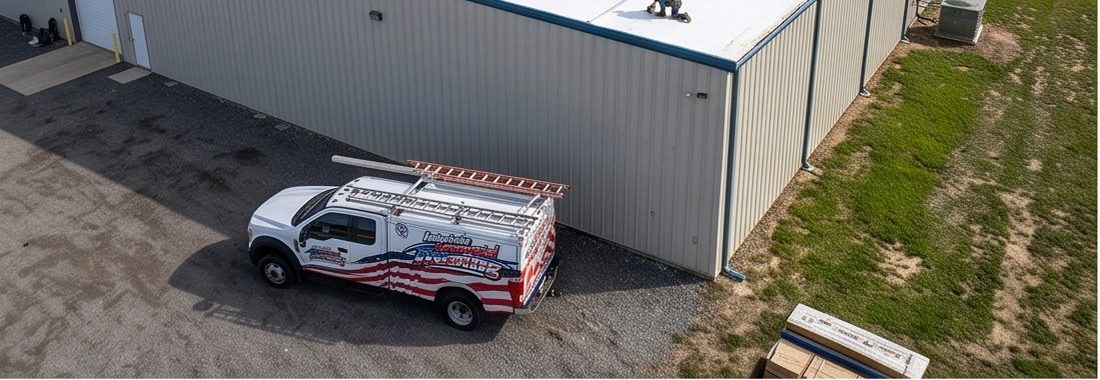
In the TPO vs EPDM decision, TPO is the better choice for air-conditioned buildings in New Jersey because its reflective white surface cuts cooling load, and its hot-air-welded seams are the strongest in the industry. EPDM is the better choice for buildings with heavy rooftop foot traffic, unusual shapes, or where long-term flexibility matters most. Both last 20–30 years when installed correctly. Installed cost is close enough between the two that it rarely decides the question on its own.
Nearly every commercial flat roof we replace in New Jersey comes down to a TPO vs EPDM conversation. They are the two dominant single-ply membranes, they sit close together on price, and both will outlast a decade of neglect. The differences are real but narrower than most marketing suggests — and the ones that actually matter are not the ones usually advertised.
Below is an honest comparison from crews who install both every week: how each membrane is made, how each one fails, what they genuinely cost, and which building types each suits. If you want the specifics of either system on its own, see our TPO roofing and EPDM roofing pages.
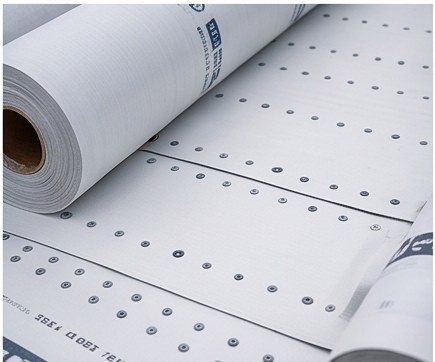
TPO vs EPDM at a Glance
| Factor | TPO | EPDM |
|---|---|---|
| Material | Thermoplastic polyolefin | Synthetic rubber (EPDM) |
| Standard colour | White (reflective) | Black (absorptive); white available |
| Seams | Hot-air welded | Adhesive tape or liquid adhesive |
| Relative installed cost | Marginally lower | Marginally higher |
| Realistic lifespan | 20 – 30 years | 25 – 30 years |
| Energy performance | Excellent (reflects heat) | Poor in summer, helpful in winter |
| Puncture resistance | Good | Very good |
| Chemical/grease resistance | Moderate | Poor (needs PVC instead) |
| Repair difficulty | Requires hot-air welder | Simple peel-and-stick patches |
| Best for | Warehouses, retail, cooled buildings | High-traffic roofs, complex shapes |
How the Two Membranes Are Actually Different
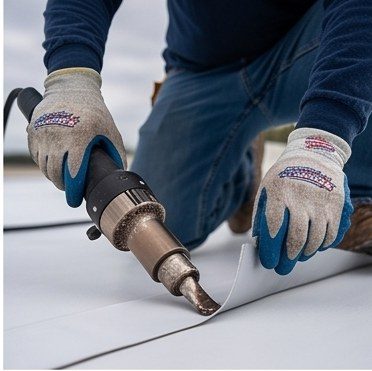
TPO is a thermoplastic. That single property drives most of its advantages. Because it is thermoplastic, it can be melted and re-fused — which is why TPO seams are hot-air welded rather than glued. A properly welded TPO seam is not a joint at all; the two sheets become one piece of material, and the seam is typically stronger than the membrane around it.
EPDM is a thermoset synthetic rubber. It cannot be re-melted, so seams are bonded with adhesive tape or liquid adhesive. That has historically been EPDM's weak point. Modern factory-applied seam tapes are far better than the field-applied adhesives of the 1980s, but the seam is still a bonded joint rather than a fused one.
The trade-off runs the other way on flexibility. EPDM stays pliable in deep cold and tolerates building movement exceptionally well. It handles irregular roof shapes, odd corners and constant expansion cycles without complaint. TPO is stiffer, which is not a problem on a large open roof but makes detailing a cut-up roof more labour-intensive.
Energy Performance: Where TPO Wins Clearly
This is the least ambiguous difference in the TPO vs EPDM comparison. A white TPO roof reflects roughly 80% of solar radiation. A black EPDM roof absorbs most of it. On a July afternoon in Edison, a black EPDM surface can reach 160–170°F while white TPO alongside it sits at 100–110°F.
For a building with rooftop HVAC and conditioned space below, that translates into measurably lower cooling costs — commonly 7–15% of summer cooling energy on a single-storey building with modest insulation. It also reduces thermal cycling stress on the membrane itself, which is part of why TPO ages well despite being younger technology.
The counter-argument is winter heat gain. A black roof does absorb useful heat in January. In New Jersey's climate the summer cooling penalty outweighs the winter heating benefit for most conditioned buildings, because cooling is electric and expensive while the winter gain is small and arrives when the sun is weakest. For an unheated warehouse, the calculus is closer and colour matters less.
Worth knowing: reflective roofing can qualify for utility incentives and contributes to LEED credits. White EPDM exists and closes the energy gap, but it costs more than black EPDM and often lands above TPO — at which point TPO usually makes more sense.
How Each Membrane Fails
Choosing a roof is partly choosing which failure mode you would rather manage. Both systems fail predictably.
TPO failure patterns
- Seam failure from under-welding — almost always an installation defect, not a material one
- Early-generation TPO (roughly 2006–2010) had formulation problems causing premature cracking; current formulations do not
- Punctures at high-traffic areas near rooftop equipment
- Shrinkage pulling at corners and curbs on mechanically-attached systems
EPDM failure patterns
- Seam separation as adhesive ages — the classic EPDM failure, usually at 15–20 years
- Shrinkage over time, pulling membrane tight against parapets and corners
- Ponding water degrading adhesive at low spots
- Damage from petroleum, grease or solvent contact — EPDM has poor resistance
The pattern worth noticing: TPO failures are overwhelmingly installation quality, while EPDM failures are more often time and chemistry. That is why contractor selection matters more with TPO than with almost any other system. A badly welded TPO roof will leak within five years no matter whose membrane is on it.
Repairs and Long-Term Maintenance
EPDM has a genuine practical advantage here. An EPDM repair is a cleaned surface, primer and a peel-and-stick patch — a competent maintenance person can handle a small puncture. TPO repairs require a hot-air welder and someone who knows how to set temperature and speed correctly, which means calling a roofer for almost anything.
Over a 25-year ownership period that difference is modest but real, particularly on buildings with frequent rooftop equipment service where small punctures are routine. If your roof gets walked regularly, EPDM plus walkway pads is a sensible pairing. See our commercial roof repair page for how we handle both.
Which Membrane Suits Your Building
After several hundred New Jersey installations, this is roughly how the TPO vs EPDM decision falls out in practice.
Choose TPO if
- The building is air-conditioned and cooling costs matter
- The roof is large and relatively simple — warehouses, distribution, big-box retail
- You want the strongest available seam technology
- Energy incentives or green building credits are in play
- You are hiring a contractor with proven welding quality and can verify it
Choose EPDM if
- The roof sees heavy foot traffic or frequent equipment service
- The roof is cut-up, irregular, or has many changes in plane
- The building is unconditioned and reflectivity is not worth paying for
- You want simple in-house repairs for minor damage
- Long proven track record matters more than newer technology
And choose neither if the roof is exposed to grease or chemical exhaust — restaurants, food processing, some manufacturing. Both TPO and EPDM degrade under that exposure, and PVC is the correct answer.
Attachment Methods Change the TPO vs EPDM Maths
Both membranes can be installed three ways, and the method affects cost, wind performance and how the roof behaves far more than most owners realise. A quote that does not name the attachment method is incomplete.
| Method | How it works | Relative cost | Best suited to |
|---|---|---|---|
| Mechanically attached | Fastened through the membrane into the deck at seams | Lowest | Large simple roofs, budget projects |
| Fully adhered | Bonded to insulation across the whole surface with adhesive | Highest | High-wind zones, exposed sites, smooth finish |
| Ballasted | Loose-laid, held by stone or pavers | Low material, high load | Structurally strong decks, EPDM mainly |
Mechanically attached systems are the most common and the most economical, but on windy sites the membrane can flutter between fastener rows, which fatigues seams over time. Fully adhered systems cost more up front and eliminate that movement entirely — on an exposed site near the shore or on a tall building, the premium is usually justified.
Ballasted systems are largely an EPDM tradition. They are quiet, inexpensive in materials and protect the membrane from UV, but they add 10–25 pounds per square foot of dead load and make leak detection genuinely difficult, because the stone has to come off to find anything. We rarely specify them on new work.
Warranties: Read the Type, Not Just the Number
Both TPO and EPDM manufacturers offer 10, 15, 20 and 30-year warranties, and the headline number is the least informative part. What matters is the type.
- Material-only warranty covers the membrane sheet if it fails from a manufacturing defect. It does not cover labour, and it does not cover seams or flashings — which is where roofs actually leak. It is worth very little.
- NDL (No Dollar Limit) warranty covers materials and labour with no cap, including seams and flashings. The manufacturer inspects the installation before issuing it, which is itself a quality check.
- Contractor workmanship warranty covers installation errors and is only as good as the contractor. A two-year workmanship warranty from a company that has been trading for thirty years is worth more than a ten-year warranty from one founded last spring.
For a TPO roof in particular, insist on an NDL warranty. Because TPO failures are so heavily weighted toward seam welding quality, the manufacturer inspection that comes with an NDL is genuinely valuable — it puts a second set of trained eyes on exactly the thing most likely to go wrong.
Note too that every manufacturer warranty carries maintenance conditions. Neglect the roof, skip inspections, or let another trade cut into the membrane for a new vent, and the warranty can be voided. A documented maintenance programme is what keeps it enforceable.
What Matters More Than the Membrane
Here is the uncomfortable truth about TPO vs EPDM: on the vast majority of buildings, the choice between them is not what determines whether your roof lasts. Three other things matter more.
- Installation quality. A well-installed EPDM roof beats a badly installed TPO roof every time, and vice versa. Seams and flashings are where roofs leak, and both are entirely down to workmanship.
- Drainage. Standing water shortens the life of any membrane. If your roof ponds, correcting the drainage with tapered insulation matters more than which sheet goes on top of it.
- Membrane thickness. A 60-mil membrane and an 80-mil membrane of the same brand are meaningfully different roofs. Thickness is a bigger lever on lifespan than material type, and it is the easiest place for a low bid to hide.
For manufacturer-level technical detail on both systems, the National Roofing Contractors Association publishes installation standards worth reviewing before you sign anything.
Frequently Asked Questions
Is TPO or EPDM better for a commercial roof?
Neither is universally better. TPO is better for air-conditioned buildings because its white surface cuts cooling costs and its welded seams are stronger. EPDM is better for roofs with heavy foot traffic or complex shapes, and it is easier to repair. Installation quality matters more than the choice between them.
Does TPO or EPDM last longer?
Both realistically last 20 to 30 years when properly installed. EPDM has a longer proven track record because it has been in use since the 1960s, while TPO formulations only stabilised around 2010. Current-generation TPO is expected to match EPDM lifespan.
Which is cheaper, TPO or EPDM?
TPO is usually marginally cheaper per square foot installed, but the gap is narrow enough that it should not drive the decision on its own. Membrane thickness and detailing quality affect what the roof actually costs you per year of service far more than the choice between the two materials.
Can you install TPO over an existing EPDM roof?
Yes, a recover is possible if the existing EPDM is dry, adhered and structurally sound, and if the building only has one existing roof layer. A separator layer or new insulation goes between them. Moisture scanning should confirm the old roof is dry first, because trapped water will destroy the new system from below.
Why do TPO roofs sometimes fail early?
Almost always because of seam welding. TPO seams must be welded at the correct temperature and speed; under-welded seams look fine on day one and separate within a few years. Early TPO formulations from roughly 2006 to 2010 also had genuine material problems that current products do not.
Is white EPDM worth the extra cost over black?
Usually not, because white EPDM typically costs more than TPO while offering no clear advantage over it. If you want a reflective roof, TPO is generally the more economical route. White EPDM makes sense mainly when you specifically want EPDM properties plus reflectivity.
Tpo Vs Epdm Across Central & North New Jersey
The guidance above applies to any low-slope commercial building, but the specifics change with local climate, code enforcement and building stock. We work on commercial and industrial buildings throughout six counties, and the housing stock, municipal permitting and weather exposure genuinely differ between them.
- Middlesex County: Edison, New Brunswick, Woodbridge, Piscataway and the distribution corridor along the Turnpike, where large simple warehouse roofs dominate.
- Somerset County: Bridgewater, Somerville, Hillsborough and Franklin Township, a mix of corporate campus and light industrial.
- Mercer County: Trenton, Princeton, Hamilton and Ewing, including a lot of older municipal and institutional building stock.
- Monmouth County: Freehold, Middletown, Red Bank and Wall, where coastal wind exposure shortens membrane life and favours fully adhered systems.
- Hunterdon County: Flemington, Clinton and Raritan Township, with more agricultural and light manufacturing structures.
- Union County: Elizabeth, Linden, Plainfield and Westfield, including heavy industrial near the port where chemical exhaust makes membrane selection critical.
If your building sits outside these counties, it is still worth asking: we regularly work beyond our core area on larger projects. See all service areas for the full list of towns we cover.
Related Guides & Services
These pages go deeper on the systems and services mentioned above:
- TPO and EPDM Roof Repair: common problems with each membrane and the repair that lasts
- TPO Roofing in New Jersey: specification, install methods and warranty options
- EPDM Rubber Roofing in NJ: where rubber membrane still makes the most sense
- PVC Roofing: the answer when grease or chemical exhaust is present
- Flat & Low-Slope Roofing: complete flat-roof systems and detailing
- Commercial Roof Replacement: how a full re-roof actually runs
- All Roofing Systems: compare every membrane we install side by side
Need this looked at on your building? Industrial & Commercial Roofing repairs, replaces and maintains flat and low-slope roofs across Central and North New Jersey. Book a free inspection and written estimate: get in touch or call 201.397.0552.