
Flat Roof Repair in New Jersey
Leaks, open seams, failed flashings and ponding on commercial flat roofs. We find where the water really gets in, repair it with materials that match your membrane, and document every fix.
Quick answer: Commercial flat roof repair starts with finding the true entry point, because most leaks begin at a detail (edge metal, curbs, pitch pans, drains or coping), not the open field. The repair then uses materials compatible with the membrane: welded for TPO and PVC, primed and taped for EPDM, plied in for modified bitumen and built-up roofs.
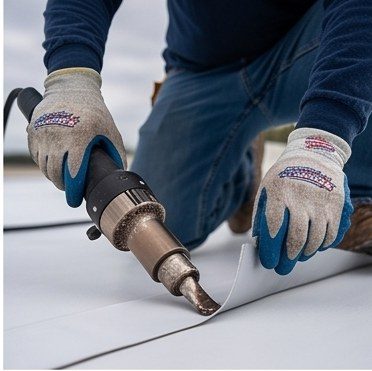
Flat Roof Repair Built Around Your Membrane
A flat roof does not fail the way a pitched roof does. Water moves slowly, finds the weakest detail and can travel under the membrane before it shows up as a ceiling stain. Our flat roof repair work is for warehouses, plants, offices, retail and multi-tenant buildings, and it starts on the roof, not at the drip. We do not work on houses.
Every membrane has its own repair method. A TPO patch that is not cleaned properly, or an EPDM patch without primer, can look fine for a season and then peel. We identify your system, test how the existing material accepts a repair and choose a fix that bonds to it. If the roof needs more than repair, we will tell you plainly.
- Leak tracing and repair
- Seam and flashing repair
- Drain and scupper fixes
- Ponding water correction
- Infrared moisture checks
- Photo repair reports
Repairs That Bond and Last
Source, Not Symptom
We trace water from the interior stain back to the detail where it actually enters.
Membrane-Matched Methods
Each repair uses materials and techniques compatible with your TPO, EPDM, PVC, mod-bit or BUR roof.
Drainage Fixed Too
We correct the ponding and clogged drains that keep reopening the same leak.
Written Repair Report
You get photos, the cause, what we did and what to watch, for your files and your insurer.
How a Flat Roof Repair Works
Trace the Leak
We inspect the interior stain, then walk the roof and test the details upslope of it.
Confirm the System
We identify the membrane and check how the existing surface will accept a repair.
Repair to Spec
Crews clean, prime or weld and flash the area following the membrane's repair procedures.
Report and Advise
You receive before and after photos and a note on anything that needs watching.
How to repair a commercial flat roof, membrane by membrane
The single biggest mistake in flat roof repair is treating every roof the same. Roof cement and a piece of fabric will slow a leak on almost anything, but it is a temporary measure, and on single-ply membranes it can make the permanent repair harder. The right method depends on the membrane, its age and how clean and dry the surface is.
| Membrane | Typical repair method | What to watch for |
|---|---|---|
| TPO | Clean and prep the weathered surface, then heat-weld a TPO patch and probe the seam | Older TPO can resist welding; if it will not take a weld, use the manufacturer's approved alternative |
| EPDM | Clean, apply EPDM primer, install seam tape or a cover strip with rounded corners, roll it down | Patches set without primer or over dirt and talc tend to lift at the edges |
| PVC | Clean and hot-air weld a PVC patch, then probe the seam | Keep PVC away from asphalt, oils and some sealants, which are not compatible |
| Modified bitumen | Torch-applied or cold-applied patch, with granules embedded in the bleed-out | Open-flame work needs fire precautions; cold-applied is often preferred near combustible details |
| Built-up (BUR) | Cut out the blister or damaged area, dry it, rebuild with multiple plies and restore surfacing | Wet felts or insulation under the patch will keep the area failing |
This page is about flat and low-slope commercial roofs specifically. Repairs to metal and other roof types are covered on our commercial roof repair page, and if you are planning a new system rather than fixing an existing one, start with flat roofing installation.
For deeper detail on single-ply systems, see our page on TPO and EPDM roof repair. Granulated cap sheet roofs follow the methods on our modified bitumen roofing page, and older multi-ply roofs are covered under built-up roofing.
Where flat roofs actually leak
On most commercial flat roofs the open field of the membrane is the last thing to fail. Leaks almost always start where the membrane stops, turns or is penetrated. When we trace a leak, these are the details we check first:
- Perimeter edge metal: loose or unsecured edge metal lets wind lift the membrane, and cracked stripping at the joints lets water in.
- Curbs: rooftop unit and exhaust fan curbs move and vibrate, and their base flashings split at the corners.
- Pitch pans: the filler shrinks and pulls away from the pipe or support, leaving an open cup that collects water.
- Drains and scuppers: clamping rings come loose, strainers go missing and the membrane tears where it turns down into the drain.
- Parapet coping: open coping joints feed water behind the wall flashing, so the leak shows up well away from the wall.
Because water can run along the deck before it drips, a stain near the middle of a warehouse may come from a parapet joint some distance away. A methodical commercial roof inspection is often the fastest way to stop a leak that keeps returning.
Ponding water: the 48-hour line and how to fix it
Some water on a flat roof after a storm is normal. Water still standing about 48 hours after rain, in weather that allows drying, is the point where NRCA guidance treats drainage as inadequate. Long-standing ponds add weight to the deck, hold dirt that degrades the surface, keep seams wet, and can affect manufacturer warranty coverage.
Can water sit on an EPDM roof? EPDM tolerates standing water better than many membranes, but ponding still stresses its seams and adds load, so it should be corrected rather than accepted. Fixes, from simplest to most involved:
- Clear drains, strainers and leader lines that are partly blocked.
- Install crickets to divert water around curbs and toward drains.
- Add tapered insulation saddles between drains to remove low spots.
- Add drains or scuppers where the roof simply has too few outlets.
Our guide to ponding water on a flat roof explains how to tell a drainage problem from a deck that has deflected.
New Jersey winters and flat roof repair
Central and North New Jersey see many freeze-thaw cycles each winter. Water that gets into an open seam or a cracked flashing freezes, expands and widens the gap, so a small fall defect can become a real leak by March. Snow adds its own problems: drifts pile against parapets and rooftop units, meltwater refreezes at scuppers and drains, and blocked outlets turn a flat roof into a shallow pond.
Winter rule of thumb: get open seams and flashings repaired before the first hard freeze, keep drains and scuppers clear, and never let staff chip ice off a membrane with shovels or picks. If snow is building up heavily, have a qualified person assess the load before anyone goes on the roof.
Owners around Bridgewater, Somerville and the rest of Somerset County often call us in late winter, when the thaw reveals leaks that started months earlier.
Temporary vs permanent repairs, and what your repair report should show
During a storm, the goal is to stop water, and that may mean mastic, emergency tape or a temporary patch applied to a wet surface. Our emergency roof repair crews do this when it is needed. It is not a permanent flat roof repair. The permanent fix comes once the area is dry, cleaned and prepared, using membrane-compatible material.
A useful repair report, the kind your insurer, landlord or next contractor can rely on, should include:
- A roof plan or photo marking each repair location.
- Before and after photos of every repair.
- The cause found, not just the symptom.
- Materials used and whether each repair is temporary or permanent.
- Nearby conditions to watch, such as soft insulation or aging flashings.
When repair stops making sense
Repair is usually the right first move, and a well-repaired roof can give years more service. It stops being good value when water has spread beneath the membrane. An infrared survey shows where wet insulation sits; if it covers a large share of the roof, patching the membrane leaves soaked insulation in place that will keep rotting fasteners and the deck.
Other signs: the roof already has two or more layers, leaks are appearing faster than they can be fixed, or the membrane is near the end of the service life described in our commercial flat roof lifespan guide. At that point the realistic options are a restoration coating such as silicone roof coating over a sound, dry roof, or commercial roof replacement. We price each option after inspection so you can compare them side by side.
What to do before a flat roof repair crew arrives
A few simple steps on your side make any flat roof repair faster and more accurate, and they protect the building while you wait:
- Move inventory, equipment and electronics away from the drip and cover them.
- Mark every interior stain or drip on a floor plan, with the date and the weather at the time.
- Note whether the leak appears during rain, after snow melt or when rooftop units are running.
- Do not send untrained staff onto the roof, especially near skylights or in wet or icy conditions.
- Pull out any existing warranty, so repairs can follow the manufacturer's requirements.
That information often shortens the leak tracing visit and helps us bring the right materials for the first trip. For a commercial flat roof repair in Somerset, Middlesex or the other counties we serve, call 201.397.0552 and we will schedule a free inspection.
Professional Flat Roof Repair in New Jersey
For dependable flat roof repair across Central and North New Jersey, commercial property owners and facility managers call Industrial & Commercial Roofing. Our certified crews handle flat roof repair on warehouses, plants, offices, retail centers, and institutional buildings throughout Middlesex, Somerset, Mercer, Monmouth, Hunterdon, and Union Counties.
Every flat roof repair project starts with a free inspection and a clear, fixed-price scope, so you know exactly what you're getting with no surprises. We work to manufacturer specification, document everything, and stand behind the results. For independent commercial roofing guidance, see the National Roofing Contractors Association.
Because we install and service every major commercial roofing system, our flat roof repair recommendations are based on your building, not on the one product we happen to sell. That means honest advice on whether a repair, a coating, or a full replacement is the smarter investment, and crews that treat your property, tenants, and schedule with respect from the first call to the final walkthrough. We document every step with photos and reports for your records, your insurer, and your warranty.
Need flat roof repair for your building? Call 201.397.0552 or request a free, no-obligation estimate and we'll respond fast, including same-day dispatch for emergencies.
Standards We Work To
- NRCA: The National Roofing Contractors Association's manuals set out accepted repair and drainage practice, including the 48-hour guideline for ponding water.
- ASTM D6878, D4637 and D4434: The material standards for TPO, EPDM and PVC sheet tell us which repair materials are compatible with your membrane.
- ASTM C1153: The standard practice for infrared imaging to locate wet insulation, used to decide between repair and replacement.
- ANSI/SPRI/FM 4435/ES-1: The edge securement standard used when we re-secure or replace perimeter edge metal that has loosened.
- OSHA 29 CFR 1926 Subpart M: The federal fall protection rules our crews follow when working on low-slope roofs.
- NJ Uniform Construction Code: Repairs stay within the code, and your local construction official decides when larger work needs a permit.
Systems We Install & Service
Frequently Asked Questions
How do you repair a commercial flat roof?
First find the true entry point, usually a flashing, seam, drain or curb rather than the open field. Then clean and prepare the area and repair it with material compatible with the membrane: heat-welded patches for TPO and PVC, primer and seam tape for EPDM, and plied-in patches for modified bitumen and built-up roofs.
How long should a commercial flat roof last?
Well-installed and maintained commercial flat roofs commonly last somewhere around 20 to 30 years, depending on the membrane, its thickness, drainage, rooftop traffic and how quickly small defects are repaired. Roofs with chronic ponding or skipped maintenance often fall short of that range.
Can water sit on an EPDM roof?
EPDM handles standing water better than many membranes, but water that remains about 48 hours after rain still stresses seams, adds load and collects debris. Manufacturer warranties may also exclude damage linked to ponding. The better answer is to fix the drainage with cleared drains, crickets or tapered insulation.
Can you reroof over an existing flat roof?
Sometimes. A recover over a single existing roof can be allowed when the existing roof and insulation are dry and sound. In most cases the building code does not allow it where two roof systems already exist or where the existing roof is wet or deteriorated. An infrared survey and core cuts settle the question.
How do I solve a roof leakage problem that keeps coming back?
A leak that keeps returning usually means the repair treated the drip location, not the entry point, or that wet insulation is feeding water to the area. Have the roof traced from the stain upslope, check flashings, drains and coping, and consider a moisture survey to see how far the water has spread.
Is flat roof repair worth it on an older roof?
Often, yes. If the membrane is still sound and the insulation is mostly dry, targeted repairs plus drainage fixes can add useful years. If wet insulation is widespread or the roof is at the end of its service life, a coating or replacement usually gives better value. We price the options after inspection.
Do you offer a warranty?
Yes. We install to manufacturer specification so your roof qualifies for manufacturer material warranties, and we stand behind our workmanship. We register and document the warranty for your records.
Are your roof inspections and estimates free?
Yes, every project starts with a free, no-obligation roof inspection and a clear, written, fixed-price estimate.
What areas do you serve?
We serve commercial and industrial buildings across all of Central New Jersey, Middlesex, Somerset, Mercer, Monmouth, Hunterdon, and Union Counties, from our base in Edison, plus the surrounding North Jersey region.
Are you licensed and insured?
Yes. We are fully licensed and carry comprehensive liability and workers' compensation insurance. Certificates are available on request.
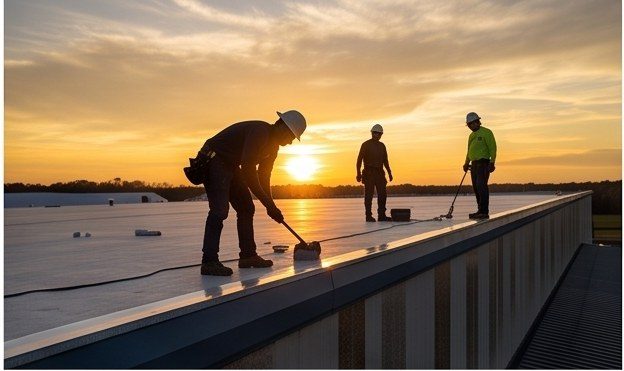
Leaking Flat Roof? Let's Find the Source.
Call 201.397.0552 for a free inspection and a written repair scope for your commercial flat roof, with 24/7 emergency response.