Silicone Roof Coating in New Jersey
A silicone roof coating can add years to a sound flat roof without a tear-off. We test the roof first, prep it properly and apply the thickness your warranty actually requires.
Quick answer: A silicone roof coating works when it goes over a dry, well-adhered roof that has been cleaned, repaired and primed where needed. It stands up to ponding water better than most coatings and can be renewed with another silicone coat later, but it is the wrong choice over wet insulation or a membrane that is coming loose.
What a Silicone Coating Does for a Flat Roof
Silicone is a liquid-applied coating that cures into a continuous, flexible, highly reflective layer over an existing single-ply, modified bitumen, built-up or metal roof. It is one of several commercial roof coating systems we install, and it is the one we reach for most often on low-slope roofs where water sits after rain.
The coating does not fix a failed roof. It protects a roof that is still basically sound from UV, weather and small leaks, and it buys time at a fraction of the cost and disruption of a tear-off. That is why every silicone job we quote starts with a commercial roof inspection that includes moisture testing and adhesion testing, not with a sprayer.
- Infrared moisture scan first
- Adhesion test patches
- Seams reinforced with fabric
- Wet-mil readings logged
- Ponding-water tolerant
- Renewable with silicone
Where Silicone Earns Its Place
Handles Ponding Water
Silicone resists breakdown under standing water better than water-based acrylic coatings.
Reflective White Surface
A bright white finish cuts roof surface temperatures and summer heat gain into conditioned space.
No Tear-Off
The existing roof stays in place, so there is less disruption, less landfill waste and no open deck.
Documented Thickness
We record wet-mil readings as we spray so the finished dry thickness matches the warranty spec.
Our Silicone Roof Coating Process
Inspect and Scan
We walk the roof, run an infrared moisture survey and confirm questionable areas with core cuts.
Test and Repair
We place adhesion test patches, remove wet insulation and fix seams, flashings and drains.
Clean and Prime
We power wash the surface and apply primer wherever the substrate or test results call for it.
Coat and Document
We spray or roll the silicone to the specified thickness and give you the readings and warranty paperwork.
Which Roofs Suit a Silicone Roof Coating
Silicone bonds well to most low-slope roofs once the surface is clean and sound. What changes from one roof to the next is the prep, and the prep is where most coating failures start. Here is how we approach the roofs we see most across Central and North New Jersey.
| Existing roof | What it usually needs before silicone |
|---|---|
| TPO or PVC single-ply | Thorough cleaning, a compatible primer in most cases, and attention to aged seams on older TPO roofs |
| EPDM | Cleaning to remove chalky surface residue, an EPDM-specific primer, and reinforced seams and laps |
| Modified bitumen | Loose granules removed, blisters cut and repaired, and often a bleed-blocking primer over modified bitumen so asphalt oils do not stain the white coating |
| Built-up roof (BUR) | Gravel removed by power broom or vacuum, the surface repaired and smoothed, then primed; common on older built-up roofs in Trenton and Elizabeth |
| Metal | Fasteners, laps and rust treated first, as covered in our metal roof restoration process |
When Silicone Is the Wrong Choice
Most pages about silicone roof coating skip this part. A coating sales pitch that does not ask about moisture or adhesion is a warning sign, because silicone will faithfully seal in whatever problem is underneath it.
- Wet insulation. Water trapped in the insulation will not dry out under a coating, and it keeps degrading the roof and deck. We locate it with an infrared survey following ASTM C1153, confirm it with core cuts, and cut out and replace the wet areas before any coating goes down.
- Unadhered or heavily blistered membrane. If the membrane is loose from the insulation or covered in blisters, the coating is only as attached as the membrane beneath it. Wind can still peel the whole assembly.
- A roof you plan to replace with a different system. Very little except silicone will bond to cured silicone. If you expect to install a new single-ply or modified bitumen roof over this one in a few years, a silicone layer usually has to be removed first.
- Widespread deck or structural damage. Rusted or soft deck sections need replacement, and a coating hides the evidence.
Not sure where your roof falls? Our coating vs replacement guide walks through the same decision we make on site.
Silicone vs Acrylic Coating in New Jersey
Both are legitimate restoration coatings. The right one depends on how your roof drains, when you can schedule the work and how much a clean white surface matters to you.
| Factor | Silicone | Acrylic (ASTM D6083) |
|---|---|---|
| Ponding water | Tolerates standing water well; a good fit where low spots hold water after rain | Water-based; prolonged ponding softens it, so drainage should be corrected first |
| Freeze-thaw | Stays flexible through New Jersey winter cycles | Performs well once cured, but must cure fully before the first freeze |
| Dirt pickup | Surface tends to hold dirt, so reflectivity drops faster unless it is cleaned | Generally stays cleaner and whiter over time |
| Application limits | Can go on in cooler weather, but the surface must be dry and above the dew point | Needs warmer temperatures and no rain or heavy dew until it sets |
| Best NJ window | Spring through fall, with shoulder-season days often workable | Late spring through early fall |
| Recoating later | Recoat with silicone | Recoat with acrylic or other compatible coatings |
On large distribution roofs along the Turnpike corridor, where a few low spots hold water for days after a storm, silicone is often the practical choice. If ponding is severe, we address drainage too, as explained in our guide to ponding water on flat roofs.
How We Prep and Apply a Silicone Roof Coating
Cleaning and adhesion testing
We power wash the entire roof to remove dirt, chalking and biological growth, then let it dry. Next we apply small adhesion test patches in representative areas, with and without primer, and pull them after they cure. The results tell us whether primer is needed and which one.
Repairs and reinforcement
Seams, laps, flashings, penetrations and drains get reinforced with polyester fabric embedded in coating before the field coat. Open seams, split flashings and punctures are repaired with like materials. These are the same details that cause most leaks, which is why we treat them first.
Application and thickness checks
Silicone goes on by spray or roller in one or more passes. During application we take wet-mil gauge readings across the roof and convert them to dry mils using the product's volume solids. That conversion is how we confirm the finished thickness meets the warranty spec rather than estimating from the number of pails used.
How the math works: dry mils equal wet mils multiplied by the volume solids. A high-solids silicone loses very little thickness as it cures, while a lower-solids product needs more wet material to reach the same dry film.
How Many Coats and How Long It Lasts
The number of coats matters less than the total dry-mil thickness. Many high-solids silicones can reach the specified thickness in a single pass on smooth surfaces, while rough or granulated surfaces and longer warranty terms often call for a base coat and a top coat.
Service life tracks thickness, surface condition and maintenance. Manufacturer warranties are typically offered in tiers, with longer terms requiring more dry mils. A renewable warranty usually comes with conditions you should know up front:
- Periodic inspections and documented maintenance, such as clearing drains and repairing damage promptly
- A recoat at the end of the term, applied over a cleaned surface at the thickness the manufacturer specifies
- No penetrations or rooftop work by other trades without proper repair afterward
We keep the inspection and application records that manufacturers ask for, and we register the manufacturer warranties we install under.
Reflectivity, Cool Roof Ratings and Cooling Load
A white silicone surface reflects much of the sun's energy that a dark roof absorbs. Coating product sheets list initial and aged solar reflectance and thermal emittance, and the Cool Roof Rating Council directory is the place to check those ratings independently.
The aged values matter more than the initial ones, because a white silicone roof coating collects dirt. The cooling benefit is largest on air-conditioned offices, retail and medical buildings with modest insulation. On an unconditioned warehouse it mostly lowers roof surface temperature and thermal stress on the membrane rather than utility use.
Choosing a Silicone Coating Product
There is no single best silicone roof coating brand for every roof. Instead of comparing names, compare these points on the technical data sheet and warranty guide:
- Solids content by volume, which controls how much wet material it takes to reach the dry thickness
- Compliance with ASTM D6694, the specification for liquid-applied silicone roof coatings
- FM Approvals and UL listings for the assembly your building and insurer require
- Warranty terms tied to dry-mil thickness and the inspection and recoat conditions that come with them
- Primer requirements for your specific substrate, confirmed by adhesion tests
We recommend a product after testing, and we explain the tradeoffs in writing. If your roof has active leaks today, we can handle flat roof repair first and schedule the coating for the next good weather window.
Professional Silicone Roof Coating in New Jersey
For dependable silicone roof coating across Central and North New Jersey, commercial property owners and facility managers call Industrial & Commercial Roofing. Our certified crews handle silicone roof coating on warehouses, plants, offices, retail centers, and institutional buildings throughout Middlesex, Somerset, Mercer, Monmouth, Hunterdon, and Union Counties.
Every silicone roof coating project starts with a free inspection and a clear, fixed-price scope, so you know exactly what you're getting with no surprises. We work to manufacturer specification, document everything, and stand behind the results. For independent commercial roofing guidance, see the National Roofing Contractors Association.
Because we install and service every major commercial roofing system, our silicone roof coating recommendations are based on your building, not on the one product we happen to sell. That means honest advice on whether a repair, a coating, or a full replacement is the smarter investment, and crews that treat your property, tenants, and schedule with respect from the first call to the final walkthrough. We document every step with photos and reports for your records, your insurer, and your warranty.
Need silicone roof coating for your building? Call 201.397.0552 or request a free, no-obligation estimate and we'll respond fast, including same-day dispatch for emergencies.
Standards We Work To
- ASTM D6694: The specification silicone roof coatings are tested against, so you can compare products on the same basis.
- ASTM D6083: The acrylic roof coating specification, useful when weighing silicone against acrylic for your roof.
- ASTM C1153: The standard practice for infrared imaging to find wet insulation that must be removed before coating.
- Cool Roof Rating Council (CRRC): Independent initial and aged reflectance and emittance ratings for the coating you choose.
- FM Approvals RoofNav: Lets you and your insurer confirm whether a coated assembly carries an FM approval.
- NRCA: Industry guidance on roof maintenance and repair that shapes how we prepare a roof for coating.
- NJ Uniform Construction Code: Your local construction official decides whether coating work on your building needs a permit.
Systems We Install & Service
Frequently Asked Questions
Do silicone roof coatings work?
Yes, on the right roof. Silicone works well over a dry, well-adhered single-ply, modified bitumen, built-up or metal roof that has been cleaned, repaired and primed where needed. It resists ponding water and UV. It does not work over wet insulation or loose membrane, which is why a moisture survey and adhesion tests should come before any quote.
How long will a silicone roof coating last?
It depends mainly on the dry-mil thickness applied, the condition of the roof underneath and maintenance. Manufacturers tie warranty length to thickness, so a thicker application qualifies for a longer term. Because silicone bonds to itself, the coating can usually be cleaned and recoated at the end of the term instead of replacing the roof.
How many coats of silicone roof coating do you need?
Enough to reach the specified dry-mil thickness. A high-solids silicone can often reach it in one pass on a smooth roof. Rough or granulated surfaces and longer warranty terms commonly use a base coat and a top coat. We confirm thickness with wet-mil readings during application, not by counting pails.
Who makes the best silicone roof coating?
There is no single best brand for every building. Compare solids content by volume, compliance with ASTM D6694, any FM or UL listings your insurer needs, warranty terms tied to dry-mil thickness, and primer requirements for your roof. Adhesion test patches on your own roof are the real tiebreaker.
Can a silicone coating go over an old coating?
Silicone generally bonds to existing silicone after thorough cleaning. Over an aged acrylic or other coating, adhesion has to be proven with test patches and a primer may be needed. Remember the reverse problem too: almost nothing except silicone sticks to silicone, so plan future roof work with that in mind.
Can silicone be applied in cold weather?
Silicone tolerates cooler temperatures better than acrylic, but the roof must be dry, free of frost and above the dew point during application and early cure. In New Jersey that usually means spring through fall, with some shoulder-season days workable. The manufacturer's data sheet sets the exact limits for each product.
Is a silicone-coated roof slippery?
It can be when wet, dusty or frosty. We recommend walkway pads or marked traffic paths to rooftop units, and crews and service technicians should follow fall protection rules for low-slope roofs. Walk pads also protect the coating from wear where people walk most.
Do you offer a warranty?
Yes. We install to manufacturer specification so your roof qualifies for manufacturer material warranties, and we stand behind our workmanship. We register and document the warranty for your records.
Are your roof inspections and estimates free?
Yes, every project starts with a free, no-obligation roof inspection and a clear, written, fixed-price estimate.
What areas do you serve?
We serve commercial and industrial buildings across all of Central New Jersey, Middlesex, Somerset, Mercer, Monmouth, Hunterdon, and Union Counties, from our base in Edison, plus the surrounding North Jersey region.
Are you licensed and insured?
Yes. We are fully licensed and carry comprehensive liability and workers' compensation insurance. Certificates are available on request.
Find Out If Your Roof Can Be Coated
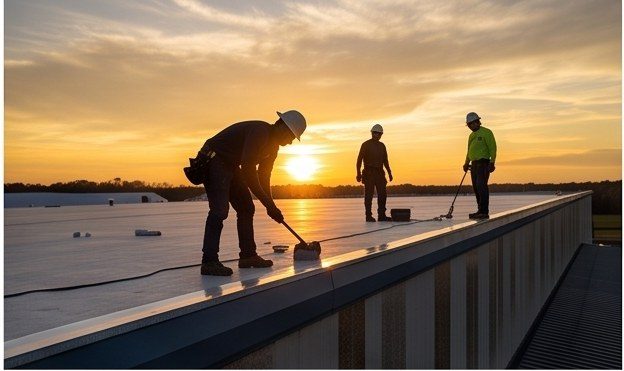
Get a free inspection with moisture scanning and a written, fixed-scope proposal for silicone coating or the alternative that fits your roof better.